Inicio

El blog Alrededor Raspberry Pi Launches 43inch Touchscreen for Embedded Projects

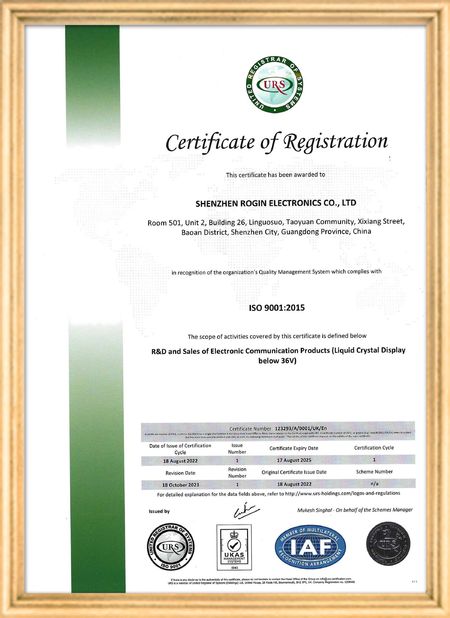
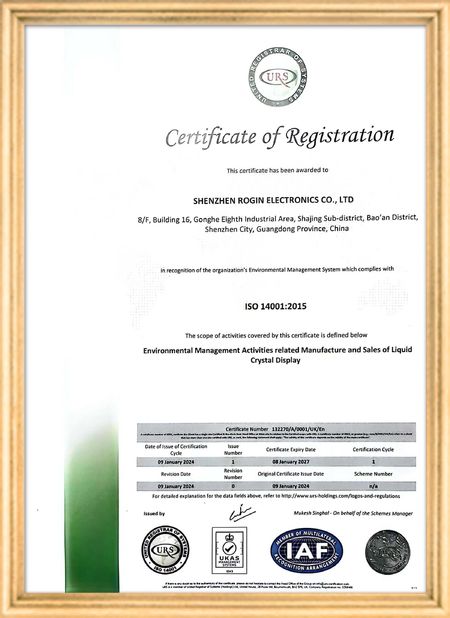
Certificación
China Shenzhen Rogin Electronics Co., Ltd. certificaciones
Comentarios de cliente
Estas pantallas funcionan perfectamente en los tranvías, con un alto brillo, anti-reflejo y estables incluso bajo vibraciones de larga duración.

—— Kasper Sørensen y sus colegas

Colores precisos, respuesta rápida y arranque normal a baja temperatura, se ajusta perfectamente al duro entorno de los sistemas de tren a bordo.

—— Nicole Becker fue la primera.

Fácil de instalar, amplio rango de temperaturas y excelente visibilidad en ambientes luminosos.

—— - ¿ Qué pasa?

Estas pantallas LCD de alto brillo son perfectas para nuestros paneles de control industrial. Permanecen nítidas incluso bajo la luz solar directa del taller y funcionan 24/7 sin ningún problema. Gran calidad de grado industrial.

—— Lukas Müller

Estoy en línea para chatear ahora
Compañía El blog
Raspberry Pi Launches 43inch Touchscreen for Embedded Projects
últimas noticias de la compañía sobre Raspberry Pi Launches 43inch Touchscreen for Embedded Projects

Have you ever felt constrained by the lack of intuitive interfaces in your Raspberry Pi projects? When seeking to enhance user interaction with DIY electronics, an integrated display with touch functionality becomes an essential solution. This article examines the technical specifications, practical applications, and integration considerations of 4.3-inch LCD touchscreens specifically designed for Raspberry Pi, offering valuable insights for makers, developers, and educators.

Technical Specifications: Understanding the Core Components

The 4.3-inch LCD touchscreen typically employs TFT (Thin-Film Transistor) technology, delivering standard resolutions such as 480×272 pixels—sufficient for most embedded applications. The touch-sensitive layer, available in either resistive or capacitive variants, serves as the foundation for human-machine interaction:

  • Resistive touch: Cost-effective solution supporting various input methods (including glove operation)
  • Capacitive touch: Delivers superior sensitivity and multi-touch capabilities

These displays commonly connect via SPI or DSI interfaces, simplifying wiring and installation by directly integrating with the Raspberry Pi motherboard. Power supply options typically include either the GPIO pins or dedicated USB ports, ensuring straightforward implementation.

Practical Applications: From Smart Homes to Educational Environments

The integration of 4.3-inch LCD touchscreens significantly expands Raspberry Pi's potential applications:

  • Smart home systems: Functions as a centralized control panel displaying environmental data and enabling direct device management
  • Industrial automation: Serves as compact HMI (Human-Machine Interface) for monitoring production data and executing operational commands
  • Educational tools: Provides visual programming platforms for learning interface design and embedded systems development
  • Multimedia projects: Enhances user experience as display and control interfaces for media players

Integration Considerations: Optimizing Project Performance

Successful implementation requires attention to several critical factors:

  • Driver configuration: Ensuring proper OS recognition of display and touch functionality
  • Software development: Utilizing appropriate libraries (Pygame, Qt for Python) for interface design and touch event handling
  • Power management: Optimizing brightness and refresh rates for battery-powered applications
  • Physical installation: Addressing stability, aesthetics, and component compatibility during initial design phases

Challenges and Future Developments

While powerful, these displays present certain limitations including resolution constraints, sunlight visibility issues, and varying touch accuracy. However, ongoing advancements promise higher resolutions, improved outdoor visibility, and enhanced touch sensitivity. Future iterations may incorporate additional sensors or wireless communication modules, further expanding Raspberry Pi's capabilities in IoT and edge computing applications.

Tiempo del Pub : 2026-09-08 00:00:00 >> Lista del blog
Contacto
Shenzhen Rogin Electronics Co., Ltd.

Persona de Contacto: Mr. Kelvin Zhu

Teléfono: +86 15919061504

Envíe su pregunta directamente a nosotros (0 / 3000)